Saturday, May 1, 2010

darjeeling from darjeeling

I started my May Day with organic Darjeeling tea that Rosie brought back from Darjeeling, India - you can read about her travels in India here. The tea is grown at Happy Valley, the highest tea estate in Darjeeling. 

This tea estate claims to use traditional tea production methods using handpicked organic leaves which are dried by fans, rolled and pressed to trap flavor, left to ferment and lastly re-dried. It was a great way to start the weekend with my Boston friends Sara & Russ.

Photo posted by: Mugdha Mumbai | 28th June 2008 on www.holidayiq.com

Friday, April 30, 2010

special delivery from BK to LA


I sent seeds to my dear friends Joey and Kate in LA who are also fellow gardeners and vegan microbiotic's. I sent a mix of macro and fun seeds like "Atomic Red" carrots. Happy gardening! 


Check out Kate's blog and her Mr.Kate jewelry line that we all love here in Brooklyn!  

the super simple compost


I started my first compost last fall. It's a super simple way to cut back on your waste and make your own nutrient-rich black gold. Dirt. Yum!

You can start with a plastic tub or a wooden box - I used a cheap ikea plastic bin because I'm not using it for the vegetable garden.

diy super simple compost

Things you will need: Container, organic food scraps, yard waste...

Step 1: Cut some little holes in the bottom (I made mine too big and something kept digging under the bin and up into the composting scraps to have a little snack.) So, I recommend worm size holes, not rat/squirrel sized holes!
Step 2: Dig a hole to submerge your bin in the ground.
Step 3: Fill with vegetable scraps, grass clippings, dry leaves, etc.
Step 4: Cover with a heavy board and top with a couple bricks to deter any animals from getting into it and you've got yourself a compost!

Things you can compost:
Browns (High Carbon)
Wood ashes
Shredded cardboard
Corn stalks
Fruit peels/rinds
Leaves
Shredded newspaper
Peanut shells
Pine needles
Sawdust
Wood Chips

Greens (High Nitrogen)
Coffee grounds
Eggshells (I have read to avoid eggshells in urban areas because they can attract rats)
Vegetable peels/rinds
Garden waste
Grass clippings
Manures
Seaweed
Tea bags
Weeds (that have not gone to seed) 

Things not to compost:
Meat scraps
Fatty food wastes
Milk products
Bones 

Wednesday, April 28, 2010

green living & lovin'


I love a clean fridge. I hate spills, molding food and condiment jars with just the tiniest bit left in the bottom. Cringe.

Since I returned to New York from Vietnam, the boys have been in Los Angeles. Having the house to myself and an already sparse refrigerator, I decided to tackle the daunting task of cleaning the fridge.
 
This post may not be directly about gardening, but I think it is very relevant to a healthy, natural lifestyle and being aware of how we treat the earth. Plus, I am utilizing some of the same ingredients that I posted for a natural weed killer.

Even though I buy natural cleaning supplies, I have been consciously paring down these cleaning supplies that I acquire - using lemons and baking soda to clean the sink or vinegar and water to wipe down stainless steel instead of buying a cleaner for each individual task. I bought an all-purpose Dr. Bronner's SAL SUDS because one $10 bottle should last 6 months to a year depending on how we use it. You can dilute 1 teaspoon in a spray bottle for an all purpose cleaner. ONE TEASPOON!
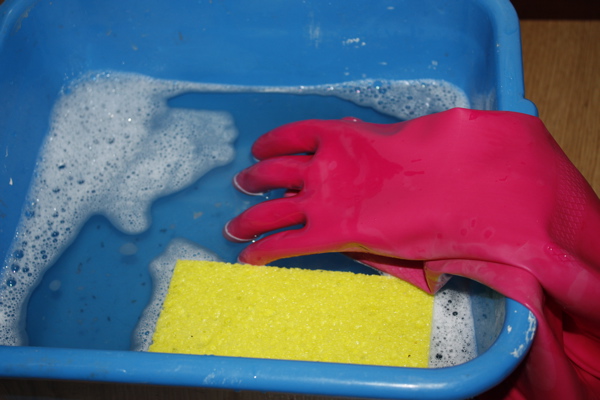
To make my fridge spotless, I used half a teaspoon of Dr. Bronner's in a bucket of hot water and my reused seventh generation spray bottle with 1 teaspoon of Dr.Bronner's diluted in water. I used baking soda on the spills that needed a little grit. 

If you embrace these simple lifestyle changes you'll not only be saving the earth, but you'll save some cash too!

Other diy cleaning products that I use:

Lemons
Mix lemon juice with vinegar and/or baking soda to make a tough, great-smelling cleaning solution. Or cut a lemon in half, sprinkle with baking soda and use it to scrub surfaces.
Other uses: Put a whole lemon peel through the garbage disposal; clean and shine brass and copper; mix 1 cup olive oil with ½ cup lemon juice for a furniture polish for hardwood furniture.

Baking Soda
Baking soda is great for scrubbing surfaces and working as a deodorizer. 
Other uses: A box in the refrigerator and freezer will absorb odors.

Vinegar
Vinegar is an all-purpose cleaner. Mix a solution of 1 part water to 1 part vinegar in an empty spray bottle for an all-purpose alternative. Vinegar is a natural disinfectant and deodorizer. 
  
Note that vinegar is acidic and improperly diluted solutions can eat away at tile grout. Never use vinegar on marble surfaces. Don't worry about your home smelling like vinegar. The smell disappears when it dries.


Great references: 

Tuesday, April 27, 2010

got wood?

Wood for our planter boxes. I have the best neighbors, not only are they supplying all this great wood, but Ben is a skilled carpenter-slash-welder-slash-artist extraordinaire and he is building them!! 

Monday, April 26, 2010

urban prayer flags

Flashback to Photography 101... shadows and prayer flags in the backyard perked my interest one morning and I snapped a few photos reminiscent of some early photo classes I took in high school. I have always loved photography. I especially miss developing black and white film - the darkroom and photo processing is so methodical and rewarding.

Sunday, April 25, 2010

leach not


Leaching has been a topic of concern since I started planning the garden in my Crown Heights Brooklyn backyard. I am concerned with the possibility of leaching in the garden, which is why I am building planter boxes with legs - to deter any chemicals from seeping into the wood and roots of the plants. 

Buildings in Brooklyn are being renovated all the time and contractors throw everything into the backyard during demolition. Pictured above are pipes in my backyard as flowers were pushing to the surface after a long winter. I have since removed the pipes, but you can be certain those pipes and other rubbish have been a fixture in the backyard for many, many years. It's hard to know what dangerous chemicals are infiltrating into the soil, but you can be sure that lead poisoning is a real threat.

Lead Poisoning 
According to this article on lead poisoning, it is common in urban areas to have high levels of lead in the soil because of leaded gasoline and paint. Lead-based paint was banned in 1978 but Crown Heights Brooklyn was being developed in the early 1900's and a lot of buildings on my street were built in the 40's and 50's, preceding the ban.

Arsenic in Pressure Treated Wood?
Years ago, there was concern about using pressure treated wood to build planter boxes because it contained arsenic. In the research I have done, this isn't an issue since the use of this dangerous chemical in pressure treated wood was banned for consumer use by the EPA in 2003. (Any pressure treated lumber manufactured for consumer use after that date has no arsenic in it.)

Helpful articles to check out: